

Headache Treatment in Lafayette, CA
Headaches are a common condition that can arise from a variety of causes, including muscle tension, joint dysfunction, or nerve irritation. Some headaches are mild and occasional, while others—such as migraines—can significantly affect daily life.
Many people experience headaches related to stress, posture, or tension in the neck. The good news is that in many cases, conservative care focused on improving movement and reducing irritation can help reduce symptoms.
Common Types of Headaches
Not all headaches are the same. Understanding the type of headache is important in determining the most appropriate approach to care.
Migraines
Migraines are often described as severe, throbbing headaches that may be accompanied by:
Sensitivity to light or sound
Nausea
Visual disturbances (aura)
Pain on one side of the head
Migraines are typically multifactorial, meaning they may involve neurological, hormonal, and environmental triggers.
Even when migraines are influenced by factors such as hormones or stress, musculoskeletal tension in the neck and upper spine can contribute to the severity or frequency of symptoms.
Cervicogenic Headaches
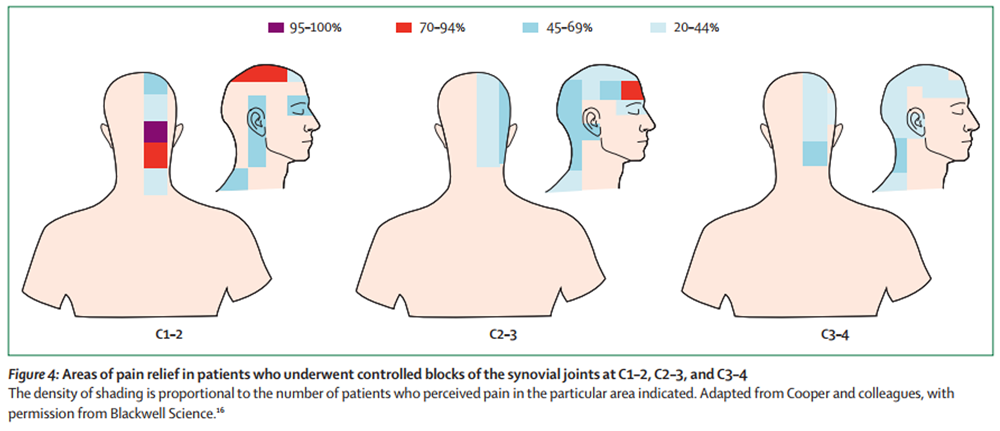
Cervicogenic headaches originate from the neck (cervical spine).
These headaches are often associated with:
Neck stiffness or restricted movement
Pain at the base of the skull
Headache that begins in the neck and travels forward
Tenderness in the upper neck muscles
In many cases, irritation of structures in the upper cervical spine—including the greater occipital nerve—may contribute to these symptoms.
Reducing irritation in these structures may help improve symptoms.
Trigeminal Nerve–Related Head Pain (Cluster-Type)
Some severe headaches involve the trigeminal nerve, which provides sensation to the face.
Cluster-type headaches may involve:
Intense pain around one eye
Tearing or redness of the eye
Nasal congestion
Episodes that occur in clusters over time
These headaches are primarily neurological in nature. However, in our clinical experience, addressing contributing musculoskeletal factors—particularly in the neck and surrounding structures—may help improve symptoms in some patients.
Common Causes of Headaches
Headaches may be influenced by a combination of factors, including:
Muscle tension in the neck and shoulders
Joint restriction in the cervical spine
Postural stress (especially prolonged sitting or device use)
Disc irritation in the neck
Stress and fatigue
Hormonal influences
Because headaches are often multifactorial, treatment focuses on identifying and addressing contributing factors rather than a single cause.
How Chiropractic Care May Help
Treatment focuses on improving movement and reducing irritation in the cervical spine and surrounding tissues.
Chiropractic adjustments may help restore normal motion in the joints of the neck, which can reduce mechanical stress and improve function.
Care may also include soft tissue therapy to reduce muscle tension, particularly in the upper neck and shoulder region, as well as mobility exercises to improve posture and movement patterns.
For patients with migraines, addressing musculoskeletal factors may help reduce the frequency or intensity of episodes, even when other triggers are present.
What to Expect
A thorough evaluation to identify contributing factors to your headaches
A clear explanation of what may be causing your symptoms
Treatment focused on improving movement and reducing irritation
A personalized plan based on your condition and goals
When to Seek Evaluation
Persistent or severe headaches should be evaluated to determine the underlying cause.
If headaches are increasing in frequency, associated with neck pain, or accompanied by neurological symptoms, an examination can help guide appropriate care.
Headache Treatment in Lafayette, CA
Village Chiropractic serves patients throughout Lafayette, Moraga, Orinda, Walnut Creek, and Pleasant Hill.
If you’re experiencing headaches or migraines, early care may help reduce symptoms and improve function.